
Commodifying Childhood: Crisis of Capitalism
Introduction
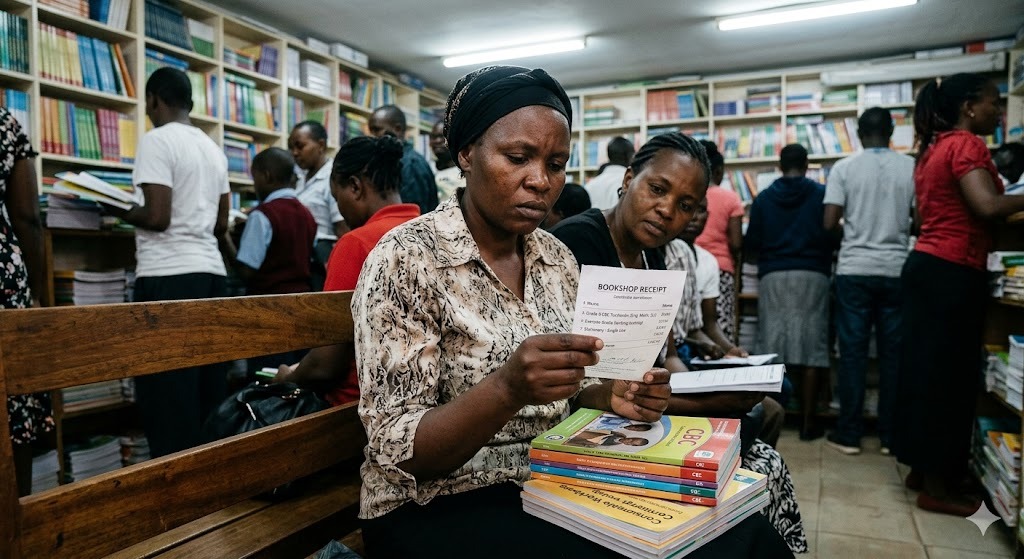
The reality of CBC is beginning to set in. In a Kenyan public school, a parent of three children presents a bookshop receipt, visibly distressed. The amount only covers basic Competency-Based Curriculum (CBC) textbooks for a single term — no uniforms, no transport, no meals, and no extra-curricular expenses, only books. Other parents respond with familiar emotions: exhaustion, frustration, and resignation. Many admit that they are short of required textbooks, have delayed payments, or are borrowing money simply to meet the costs.
The most revealing fact is that CBC books are meant to be consumables: children write in them, cut the pages, mail them, and dispose of the papers at the end of the year. No reuse of anything, no hand‑me‑down culture, no chance of cost sharing among siblings or neighbours. CBC has instead implemented the learning content into a repeating stream of revenue for the publishers, printers and education suppliers.
This article draws from Marxist political economy to argue that CBC is not just an educational reform but a tangible manifestation of the crisis of capitalism and the commodification of social life. Rather than organising education around social need, CBC increasingly structures it around market imperatives and profit‑making opportunities. The curriculum illustrates how class power operates through state institutions and highlights the limitations of democratic accountability and national sovereignty within Kenya and the wider Global South.
Major concepts of CBC analysis
Instead of viewing CBC as a neutral pedagogical reform, a Marxist perspective situates it within the broader framework of capitalist relations of production and social reproduction. From this standpoint, education is not just a system for imparting knowledge and skills but also a mechanism through which existing social and economic relations are maintained and reproduced.
There are three concepts that are particularly helpful: commodification, reproduction of labour power, and the class character of the state.
First, commodification can be defined as the process that transforms social activities and objects into commodities — items that are created in order to be exchanged and sold as opposed to being used directly. Capitalist education is no longer about imparting knowledge; it is a place where textbooks, exams, platforms and services are manufactured and marketed as commodities. An example of this shift is that books are not durable sources of knowledge but rather single‑use products that need to be repurchased constantly.
Second, education is central to the reproduction of labour power. Schools help manufacture workers who possess the skills, discipline and ideological bias that capital needs. The competency orientation of CBC is centred around quantifiable skills, outcomes and competencies that can be well incorporated into this role. It is assured to create flexible, employable people while formalising the learning process to create stable capital markets.
Third, Marxist theory no longer views the state as a neutral mediator; rather, it is an institution that, however autonomous, eventually guarantees the conditions for accumulating capital and reproducing a series of class relations. The Kenyan state formulates and executes CBC within a globalised capitalist order as well as through coalitions with particular groupings of capital, despite the purported interest in doing so on behalf of the nation or the future of children.
The paradox of profit and need in CBC
This is one of the main contradictions of capitalism: the conflict between profit‑oriented production and the satisfaction of human needs. An authentic, needs‑based school system would be defined in terms of cheapness, reuse, and accessibility for everyone. Learning media would be made durable; the curriculum would be designed to reduce unnecessary expenditure; and the material realities of households would inform policy decisions.
CBC, by contrast, is organised on the basis of an implicit profit logic. The transformation into consumable books and activity‑based learning requires each child, annually, to obtain a new set of materials. This ensures that publishers and other businesses are always in demand, and at the same time it eradicates the informal practice of sharing textbooks which helped families make education more affordable. It may not be the number of books that parents require, but rather the number of sales that capital requires.
In this case the economic irrationality for households is completely rational from the point of view of capital. Parents are forced into a loop where the use‑value of the books (bringing children up to learn with them) cannot be separated from their exchange‑value (their price), but the design is created in such a way that the use‑value is eroded in a short time. What appears to be pedagogy is actually a process of forced obsolescence.
This brings out the profit‑need contradiction very clearly. The system still requires purchases regardless of the decision parents make between rent and books, food and fees. The continuation of CBC in spite of such obvious misery indicates that the main constraint is not what families can afford but what the education commodity chain can capitalise on.
The labour/capital issue
The second contradiction that Marxist political economy explains is the antagonism between capital and labour. Capital aims at reducing wages and the costs of producing labour power as a means of maximising surplus value. Education is part of this reproduction — it is one of the costs of creating a new workforce.
Most Kenyan households today are trapped in a cycle of precarious, underpaid, and informal labour, all while the cost of living skyrockets. The introduction of the Competency‑Based Curriculum (CBC) has only deepened this crisis, placing a massive financial and time burden on families. Parents have essentially become unpaid project managers, forced to constantly buy materials, print resources, and supervise schoolwork. Meanwhile, teachers — who are already underpaid — are expected to absorb additional unwaged labour, spending their own time improvising materials that the state fails to provide.
Looked at through a Marxist lens, this is a classic case of transferring the crisis of capital accumulation onto working‑class families. Capital refuses to pay for the actual cost of reproducing its workforce. Instead, it pushes that burden onto the shrinking wages of workers and the unpaid labour of parents. By redesigning education to increase private household spending instead of funding it as a public good, the system actively protects corporate capital at the expense of everyday citizens.
The intra‑capitalist conflict in education
Marxist analysis also recognises conflicts within capital, where different sectors and fractions look for access to profitable realms. CBC can be interpreted as a landscape where certain fractions of capital — such as large educational publishers, curriculum consultancies and private education providers — have gained huge benefits.
Under the older textbook regime, a significant part was taken by informal and second‑hand markets. Books were passed on, bought and reused; small printers and bookshops had their place in the distribution chain. These arrangements are undermined by CBC because books are made to be consumable, so second‑hand markets shrink. Due to the strict adherence to particular sets of approved texts and activity books, the large publishers that are capable of fulfilling the bureaucratic and capital requirements prevail.
Meanwhile, education corporations, educators, and ed‑tech solutions take advantage of new opportunities by evaluating international and domestic education. A competency‑based curriculum is amenable to constant testing, data gathering, and software‑based solutions, establishing new sites of capitalisation. These can compete with, and in many cases even replace, older educational actors.
What is discussed publicly as a technical issue of pedagogy and modernisation is, materialistically, a restructuring of the beneficiaries of education. CBC is a consequence of intra‑capitalist struggle where some capitals gain an advantaged status supported by state authority and the discourse of reform.
Another contradiction that lies at the core of capitalism is the collective nature of production versus private ownership of the product. This is shown clearly through education.
The construction and management of schools is done through taxation, and the training of teachers occurs through publicly subsidised institutions. Labour, care and resources are provided by parents and communities. The whole process of educating children is highly communal. But the returns from book sales, training agreements, and peripheral services go to private firms and individuals.
When CBC requires particular learning materials and formats, it effectively redirects the product of national labour — taxpayer money, parental sacrifice, and youth labour — into individual revenue streams.
Sovereignty, the state and world capitalism
Where does real decision‑making power reside? The myth of full national sovereignty and the naïve argument that foreigners determine everything are both dismissed by a Marxist analysis. Rather, it regards the Kenyan state as very autonomous yet structurally embedded in a world capitalist system, and influenced by powerful exogenous forces.
On one hand, the state formulates and implements CBC, legislates and controls the public narrative. Conversely, it works within the limits dictated by debt, international financial institutions, donor regimes and global policy. Compliance with this script has both symbolic capital ("modernity", "best practice around the world") and material gains (access to funding, technical help, and investment).
This is dependent sovereignty according to Marxist and dependency theory. Kenya is formally sovereign; materially, its social policy decisions are determined by the necessity to stay creditworthy, to be attractive to investors, and to act in accordance with international standards. It is within this narrow space that it can dictate how to implement CBC, but doubting the commodifying logic of such reforms generally would mean going against the broader global capitalist system.
The outcome is a state that mediates between global capital, national manifestations of capital, and the citizens themselves. It usually settles this conflict on the side of accumulation in education policy: making reforms that liberate markets and impose costs on households, and packaging them as necessary modernisation in the interest of children and competitiveness.
Political agency, opposition and the limits of democracy
But this is not a tale of absolute subjugation. Parents, teachers, students and communities are not inactive. The day‑to‑day activities of complaining, partial non‑compliance, improvisation, and legal struggles are all forms of class struggle, even if disjointed and defensive.
Those parents who omit some books, pass materials informally, or push back together in school meetings are in practice rejecting complete commodification, although they may not have long‑term systemic change as their immediate intention. Those teachers who lower the material requirements, make photocopies and offer quiet safeguards to learners who cannot afford everything play small but reinstating roles in a commodified set‑up.
Nevertheless, the process of formal democratisation through elections, public hearings, taskforces, etc., has so far not been able to radically transform the logic of CBC. Politicians change, rhetoric evolves, small concessions are gained (schools are threatened not to coerce parents, vows are made to review the burdens) — yet the same commodity form of education is retained. This indicates the structural constraints of liberal democracy under capitalism: one can change policy, but not in a manner that poses any significant challenge to the accumulated patterns of accumulation without a commensurate accumulation of organised counter‑power.
In this respect, the question of who will rescue Kenyan parents and children from this is not a call to benevolent technocrats. It is a political question of how the collective capacity to confront domestic and global forms of educational capitalism can be developed by working people, both within and outside schools.
A Marxist critique does not simply criticise this reality; it suggests other directions. De‑commodification of education would mean making education a right for all, designing reusable and affordable schooling materials, publishing or strictly regulating textbooks and platforms, and increasing progressive public funding so that schooling is no longer dependent on the wallet of a parent.
More deeply, it would require the development of organised social forces — parents' associations, unions, community movements, and student groups — that can oppose the state‑capital alliance in education policy. It is only then that the issues of curriculum, pedagogy, and cost can be democratically determined according to need, justice and equity, rather than profit and competitiveness.
The receipt of the distressed parent is not a mere personal misfortune. It is a material record of global capitalism's penetration into the intimate sphere of the home and the classroom. Such is the result of social relations that can, in principle, be disputed and changed.
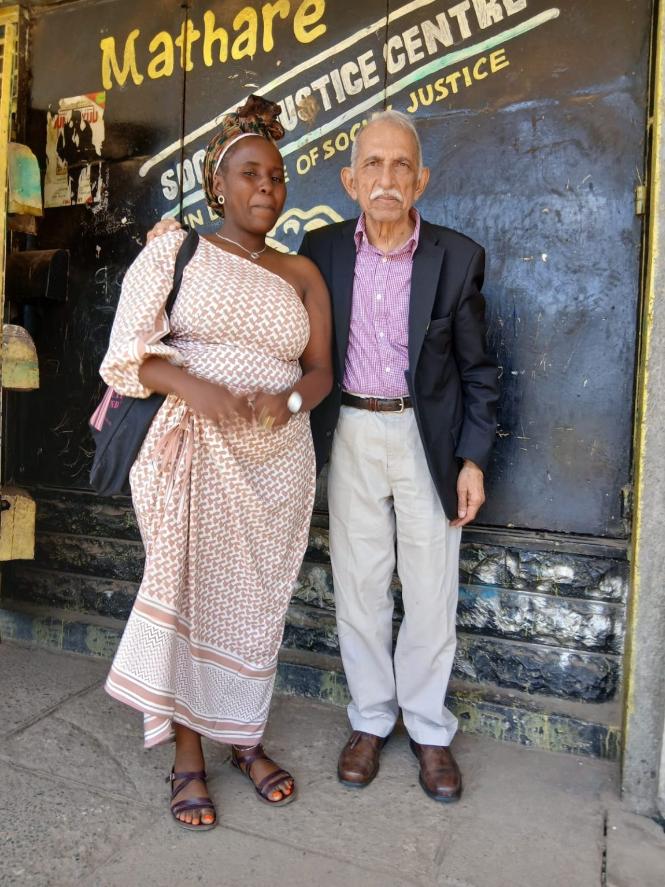
Tiffany Mbugua is a Kenyan human rights scholar, political educator, and community organiser whose work centres on land struggles, gender justice, constitutionalism, and decolonial approaches to research, education, and justice in Africa. She holds a Master of Arts in Human Rights from the University of Nairobi and brings experience across both human rights and social and behavioural sciences fields.






0 Comments