

The Blood Price of Capitalism in Nairobi
The Blood Price of Capitalism in Nairobi
Wanjira Wanjiru
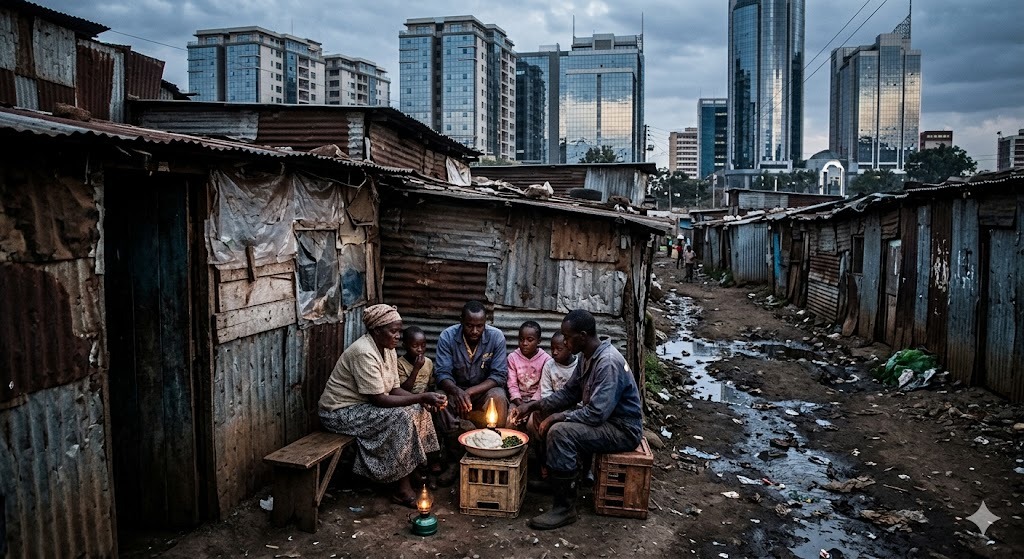
Capitalism in my city is not an abstract theory — it is the daily architecture of inequality, carved into the streets and lives of ordinary people. It is the gated estates guarded by private security, standing in clear contrast to the informal settlements where families are compressed into single rooms, bound by a single dream of survival. It is the glittering malls overflowing with imported goods, while local traders are violently evicted from streets they have sustained for decades. The city expands, but its people do not expand with it. Wealth rises like towers, but the poor remain trapped beneath the rubble. The promise of opportunity becomes a myth, repeated endlessly to justify the suffering of the many. Capitalism here is not broken; it is functioning exactly as designed: to concentrate wealth, privatise dignity, and turn survival into a competition that only a few can win.
Colonial Roots of the Cash Economy
Africans once practised barter trade rooted in reciprocity and community, but the cash economy arrived through colonial violence. Hut taxes and breast taxes forced Africans into wage labour on settler farms simply to survive, while resistance was met with beatings, imprisonment, land dispossession, and the destruction of families. Poverty itself became criminalised. A century later, this same logic persists in Nairobi's informal settlements, where the poor are punished simply for existing in poverty.
The structural adjustment programmes of the 1980s and 1990s deepened this crisis. Public goods were privatised, local industries collapsed, and education and healthcare became inaccessible to millions. JM Kariuki's warning that Kenya would become a nation of "ten millionaires and ten million beggars" has become a terrifying reality, with wealth concentrated in the hands of a tiny elite while the majority struggle daily to survive.
From colonial taxation to structural adjustment, from gated estates to police bullets in Mathare's alleys, capitalism in Kenya has always been violent. It kills through hunger, unemployment, exclusion, and the criminalisation of poverty. It is not a system in crisis, but a system built on crisis, sacrificing the poor so wealth can accumulate at the top. Mathare stands at the frontline of this violence, but it is also a site of resistance, where communities continue organising for dignity and social justice.
Violence as a Feature of Capitalism
In Nairobi, extrajudicial killings are not just random acts of brutality. They have been the silent enforcement arm of a system that fears the poor more than it fears injustice. They are the continuation of colonial legacies that despised, neglected, and killed the natives with impunity. When the economy excludes, the police are sent to discipline those it has abandoned. When unemployment rises, suspicion rises with it. When poverty becomes widespread, the state responds with brutal force.
The victims are almost always the same: young, poor, mostly men from neighbourhoods the city pretends not to see. Their deaths are explained away with the same tired language — "suspect," "criminal," "gang member." But these were children of a system that abandoned them long before it killed them. They are sacrificed to maintain the illusion of order. Capitalism criminalises poverty, and extrajudicial killings become the punishment.
Specialized Police Units
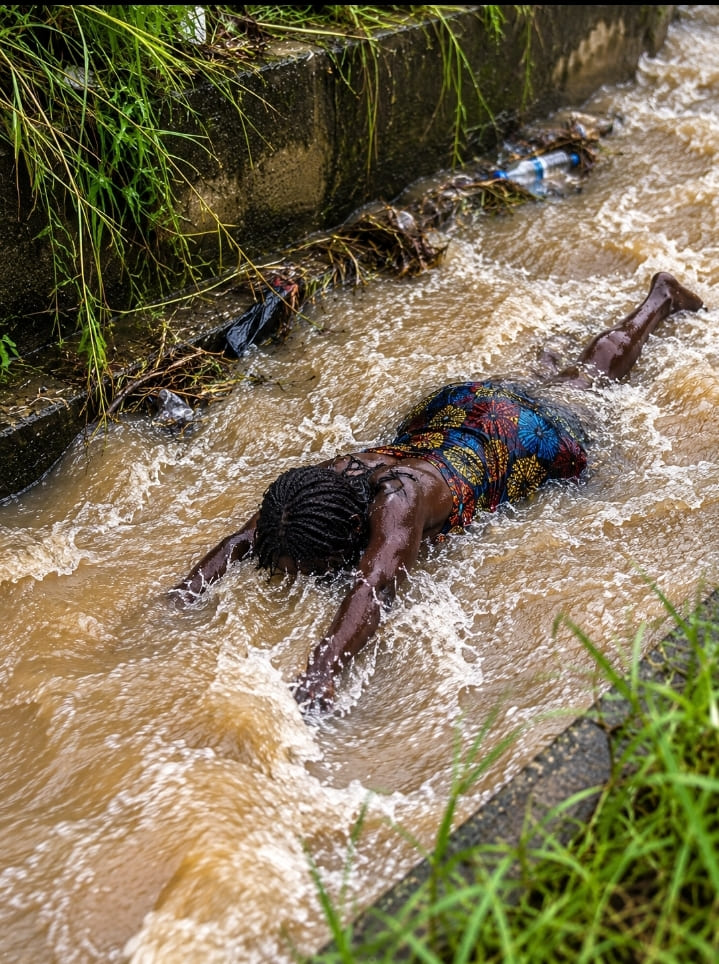
For decades, Nairobi's informal settlements have lived under the shadow of specialised police units whose names became synonymous with fear. The Flying Squad of the 1990s, created to combat violent crime, quickly evolved into a plain-clothes force known for disappearances and unmarked Subarus that sent entire neighbourhoods into panic. Before them came the Kwekwe Squad, formed to crush the Mungiki movement but soon expanding into a covert death squad targeting young men in Central Kenya and Nairobi's slums. Though these units were eventually disbanded, their methods — rapid raids, masked officers, bodies dumped in forests or riverbanks — continued long after the names disappeared. The horror of bodies retrieved from River Yala in 2022 was a chilling reminder that state violence is systematic, not exceptional.
Other units followed, each carrying a different mandate but repeating the same patterns of brutality. The Anti-Terrorism Police Unit (ATPU) became notorious for disappearances and torture among Muslim and Somali communities, while the Special Service Unit (SSU), operating under the Directorate of Criminal Investigations, was repeatedly linked to kidnappings and killings before its disbandment in 2022. Across names and eras, the pattern remains constant: elite units operating in plain clothes, using unmarked vehicles, targeting poor and marginalised communities, and acting with near-total impunity.
We saw these very patterns during the Gen Z protests of 2024/2025 — masked policemen, plainclothes abductions, enforced disappearances, and killings of young protesters. Women's bodies dismembered and dumped in Kware, youth abducted until Kenyans made enough noise online and on the streets. "Stop Abductions" trended for months.
Personal Loss and Political Awakening
I was drawn into activism after witnessing state brutality daily in Mathare, where police went on killing sprees in the slums. I lost my elder brother, Damason Irungu, to these senseless killings — shot as he ran from the police, the bullet piercing the back of his neck and exiting through his mouth. The autopsy confirmed what we already knew: he was killed by the Pangani police officers. Many other boys I grew up playing with suffered the same fate.
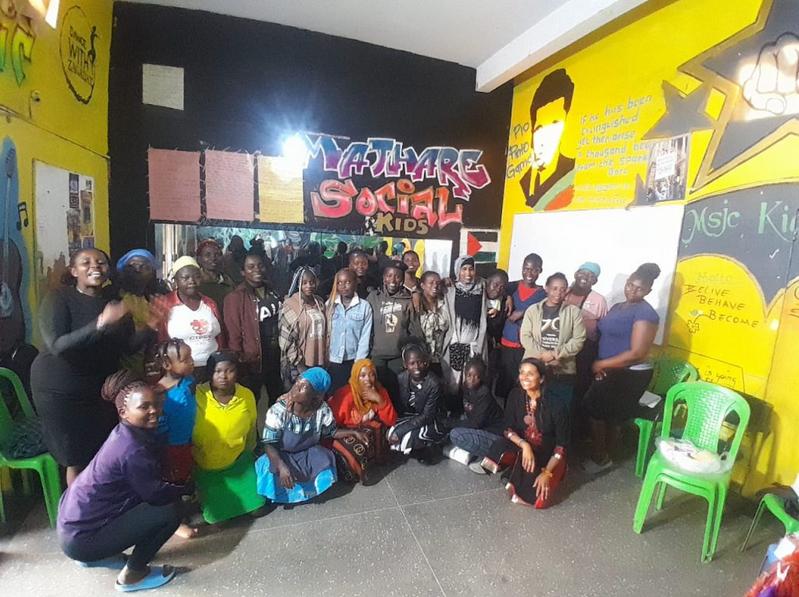
I hated how the media reported on them, erasing their humanity and reducing them to statistics. That erasure is why, at Mathare Social Justice Centre, we produced the first report on extrajudicial killings in Kenya: Who Is Next? It documented 803 police killings nationally in just three years. Some were reported in newspapers, but many were known only within Mathare — stories carried in the grief of families and the memory of communities determined not to forget.
Justice Delayed, Justice Denied
The violence of post‑colonial Kenya lives in the slums, the morgues, the courtrooms, and in the memories of mothers who never stop grieving. Cases drag on for years, families age on courtroom benches waiting for justice that never comes. The case of Nura Malicha, shot dead in Kiamaiko in a case of mistaken identity, is still in court. Thirteen‑year‑old Yassin Moyo, shot on his balcony by police enforcing curfew, is still in court. Boys barely old enough to vote are shot dead for snatching a phone; others burnt alive for being poor in the wrong neighbourhood.
In the slums, the sight of a Subaru patrol car triggers an instinctive flinch, a silent prayer, because everyone knows a life can be ended by the twitch of someone else's finger.
This is how Maina died. A hardworking young man who did not run when police appeared at his base in Green Park, Mlango Kubwa. He was not a criminal; he was at home with friends and did not see the need to run. For this, he was allegedly shot dead by killer cop Ahmed Rashid. The community erupted in protests along Juja Road. Maina left behind a pregnant wife — a woman now forced to shoulder the burden of raising a child alone in a city where capitalism punishes the poor for simply existing. And a child will grow up without a father because of impunity.
The Criminalisation of Poverty
Maina's story is the story of Mathare and every slum in Nairobi. His death, like hundreds of others, reveals the blood price of inequality. In this city, who lives and who dies is determined not by justice but by the depth of their pockets.
Take the National Youth Service programme. For a brief moment, young people in Mathare were paid weekly to keep their communities clean. Those weeks were peaceful — no police killings, no insecurity. Mathare was clean, the people were happy. Then the NYS billions were stolen, money meant for the poor siphoned into the pockets of the rich. That was January 2018. By the end of February that year — a month of only 28 days — we had documented fourteen police killings in Mathare alone. The billionaire thieves went scot‑free.
Nairobi is a city of contradictions. Glass towers rise higher each year, reflecting the sun like monuments to progress, while just below them, entire communities live one Subaru away from grief. Police killings happen in every slum — Mathare, Kibera, Kayole, Dandora, Mukuru, Kariobangi, Korogocho, Githurai. No community has been spared.
The Birth of Social Justice Resistance
It is from this blood‑soaked reality that the social justice movement was born. Each justice centre began documenting cases, naming the dead, and demanding justice through the courts. We marched during the Saba Saba "March for Our Lives" in 2018 and 2019, demanding an end to police killings in slum areas and recognising the interconnectedness of our struggles.
But because these were seen as the struggles of the poor, they received little support from the upper middle class. That silence helped normalise police killings, laying the groundwork for the brutality that shocked the entire country during the Gen Z protests.
The killings forced mothers to transform mourning into organising; turning grief into courage and pain into collective power. Carrying photos of their sons and daughters, they became the backbone of resistance, refusing to let the country erase what had been done to their children. Across Nairobi's informal settlements, communities continue to fight back — through vigils under streetlights, chants in protests, graffiti that defies erasure, and the constant documentation of the dead.
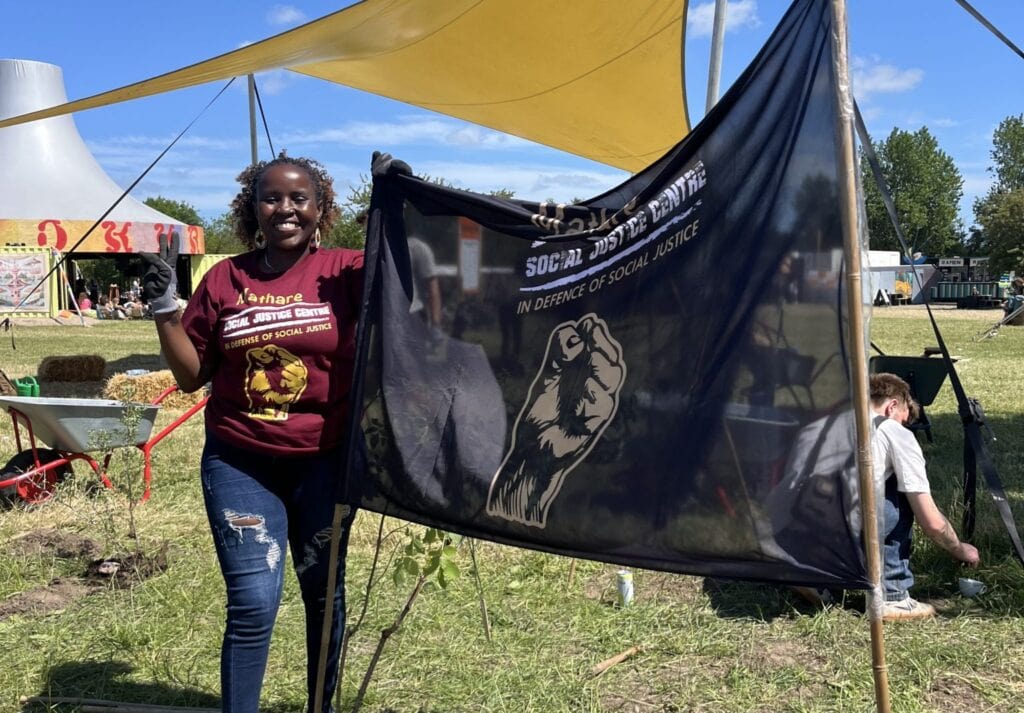
Even the landscape has become part of this struggle. Memorial trees planted across Mathare and Nairobi stand as living witnesses, rooting memory in the ground where blood was spilled and reaching upward toward futures denied to the young. Each tree carries a promise: for the boy killed for a phone, the girl disappeared after a protest, the mother who died waiting for justice. In this way, memory becomes resistance, planting becomes protest, and art is our testimony. The crisis of capitalism in the city is written in loss, but so too is the persistence of resistance — so long as people remember, organise, and continue to fight, the city holds the possibility of breathing again.



0 Comments