
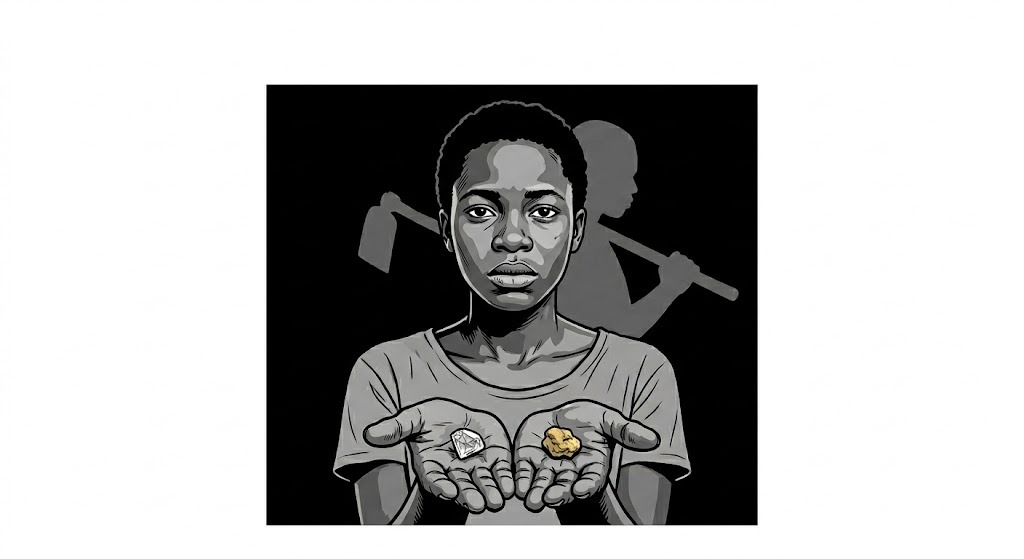
Minerals and Conflict Crisis of Capitalism
Harvest of Strife: Unearthing the Conflict-Ridden Terrain of Natural Resource Exploitation in Africa
I walked for two days straight without sleeping. I stopped only at streams to drink water. I felt as if somebody was after me. Often, my shadow would scare me and cause me to run for miles. Everything felt awkwardly brutal. Even the air seemed to want to attack me and break my neck. I knew I was hungry, but I didn't have the appetite to eat or the strength to find food. I had passed through burnt villages where dead bodies of men, women and children of all ages were scattered like leaves on the ground after a storm. Their eyes still showed fear, as if death hadn't freed them from the madness that continued to unfold.
The excerpt above is a horrid reflection of Ismael Beah's experiences during the Sierra Leone Civil War that ravaged his homeland during the 1990s. In Beah's case, the civil war resulted in the forceful displacement from his village, the demise of friends and family and the eventual capture that led him to be coerced to a child soldier. The memoir depicts horrific experiences when he was in his early teens. Most of us in this age, we were enjoying our unfettering energy in experimenting in plethora of activities and defining our own form of independence but for Beah's case this experience was stolen by the neglected realities of capitalism.
The accusation of the 'revered' political economy is in line to the true intentions by the rebel factions, which is not to fight for the public good but to permanently seize control of the rich diamond regions of the state (Rogers 2006). For the sake of gaining capital, the civil war led to half of the population (4.5 million people) to be displaced, at least 50,000 deaths and 100,000 victims of mutilation. The instigators of this grievous human treachery garnered billions from trafficking and smuggling the earth material that claimed importance on 'rock over blood'.
According to the insightful report released by the Partnership Africa Canada (2000) publicly disclosed the ulterior motive of the civil war and accused the international diamond market to be as guilty as the soldier causing mayhem and tragedy to countless civilians. The appalling arrogance of western diamond traders fueled the continuance of the war. For instance, the report firmly accuses the largest diamond mineral company, De Beers, of having diamond trading companies in Guinea and Liberia. These countries have a low diamond producing ratio than their neighbor, Sierra Leone, which the report claims that they were transit countries for smuggled diamonds.
Another revelation is the complacency of the Diamond High Council (HRD), located in Antwerp, Belgium, an authority that deals in diamond grading and jewelry grading. PAC (2000) describes that the HRD were not concerned on the information on the true source of the diamonds entering the country. In 1998, the Government of Sierra Leone recorded exports of 8,500 carats while the HRD recorded imports of 770,000 carats originating from the state. The significance of this indifference indicates that the proceeds of more than 700,000 carats were likely channeled in the sustenance of the civil war. These distasteful facts are an indication of the overzealous nature of corporations and mining institutions that seek to satisfy the western market over the stability of the African nation. This can be cemented by the fact that in 1998, 115 million carats of rough diamonds with a market value of 6.7 billion dollars (at that time) were converted to 67.1 million pieces of jewelry to be consumed as a luxury by the global north.
Due to the mounting international pressure, a process was outlined by the United Nations that sought to control the flow of blood diamonds in the region which was termed as the Kimberley process (Rogers 2006). The process entailed stringent verification of the source of rough diamonds and ensure financial proceeds were not tied in financing bloodshed and mayhem in the human society. The Sierra Leone government had the opportunity to establish their legitimate and ethical diamond industries and, furthermore, restricting the rebels' capability to exchange their diamonds for weapons. Despite this effort, Rogers (2006) and Lee Wangraf (2018) indicate that there are shortfalls with the Kimberley process as participating nations aren't compliant in ensuring the monitoring and evaluation of the process which restricts opportunities in strengthening the process as the industry evolves. The lack of compliance is unarguably in ensuring profits are not strangled by noble objectives of the process.
Sierra Leone civil war is an illuminating indication of the true nature of capitalism which declares the end will ever justify the means. The unscrupulous opportunities that were offered by key players in the diamond industry are all veiled under the tagline of free markets and competition without regarding the human detriment. Sierra Leone isn't the only victim of the international capitalist system; another African state has been pillaged and still being pillaged by the 'free market' forces is the Democratic Republic of Congo. The DRC holds natural resources that are worth 24 trillion dollars but since their independence, the capitalist economic grading system, Gross Domestic Product, is $69.474 billion as of 2023 (Carpenter 2012).
Similar to the tragedies of Sierra Leone, the prosperity of the Democratic Republic of Congo has been suppressed to ensure seamless exploitation of its natural resources. Congo has been consistently plagued by conflict since the 1990s to date. Initially, the cataclysmic effect of the Rwandan genocide led Hutu militants to flee to Zaire hence forcing the Rwandan government to send armed forces to thwart any future response by the militants. This opened an opportunity to unscrupulous corporations to seize an opportunity to acquire the minerals cost effectively. Uganda and Burundi, neighboring countries of Zaire, saw fit to join Rwanda and form a coalition, the Alliance of Democratic Forces whose marketed objective was to stop the rebel Hutu group, the FDLR. The objective has been refuted by numerous experts claiming the sole purpose was to access the minerals for their own benefit alongside their silent international partners (Carpenter 2018).
The tour of the Alliance of the Democratic Forces led to the first Congo War (1996-1997) where their leader Mobutu was ousted and inherently led to the creation of numerous ethnic militias based in the resource rich areas in the North Eastern region of the DRC (Mullins 2008; Carpenter 2012). The initial efforts of ADF led Laurent-Désiré Kabila to gain power until he was later assassinated in 2001 while the Second Congo War (1998-2003) was ongoing. Since 1996 to 2010, there have been 5.4 million deaths as a result of the conflict hence being the most fatal conflict since the Second World War (Carpenter 2012). One million have been displaced by the war and further being victims of grievous crimes against humanity, rape, forced slavery and labour (Mullins 2008). To date, Eastern Congo is still in conflict as government forces and rebel forces still scramble to control the natural resources inducing much harm to innocent civilians and degrading the beautiful landscapes of the Congo.
Crushing the Resource Curse Rhetoric
(So what did the 'brightest minds' say)
The tragedies that circumvented natural resource exploitation within Africa and the Global South prompted renowned economists such as Jeffrey Sachs to offer an explanation dubbed the resource curse. The theory argues that a higher amount of natural resources in a developing nation has a high propensity to induce civil war and slower development (Carpenter 2012). This clearly accuses natural resources being the sole variable to induce chaos and mayhem to an underdeveloped nation. This is surely a simplistic belief as it clearly negates the other external factors that liberal economists wish not to go against.
The fact that the theory is termed as a curse is an indication of the lack of analysis on the historical and economic relationships that are attributed to the commodity (Lee Wangraf 2018). This is termed by Karl Marx as commodity fetishism which is ascribing natural resources innate attributes. In the case of the Democratic Republic of Congo, the resource curse fails to explain the issue appropriately as simply claiming that the tantalum or the gold deposits are the only reason for conflict is false.
Multinationals and corporations have significant power than small and medium states hence they tend to use their might to ensure cheap access to natural resources. During the Congo Wars, the United Nations Security Council highlighted that over one hundred corporations had problematic or suspect dealings that sustained the wars financially (Mullins 2008). De Beers was included in the list and numerous global north countries such as Belgium, Canada, Germany, United States, and the UK had multiple corporations being listed. Similar to the Sierra Leone Civil War, nations that claim the importance of free markets were inherently involved in another bloody conflict for the sake of profits.
The involvement of Uganda and Rwanda pillaging their fellow state was purely evident but the international development finance closed their eyes to the mayhem. Due to the profits from the smuggled minerals from Congo, Uganda and Rwanda were congratulated by the IMF and the World Bank by upgrading their economic health indicators (Mullins 2008). As a result, both countries were offered additional lines of credit which inherently led to the direct and indirect financing of the conflict. According to Mullins (2008), this level of arrogance of the World Bank and the IMF is not the first occurrence as they ignored Cambodia's illegal exploitation of its neighbor's timber resources in the 1980s.
Yet despite these horrid revelations, economists formulate a theory termed the resource curse rather than have the courage to deem what it truly is: Capitalism's curse.
What then can be done?
(The enemy is closer than you think)
The paper has highlighted two situations of mineral exploitation within the African continent and offered a glimpse of the roles of international organizations and Global North states have played in pillaging and killing us Africans. But despite it all, there is a player that is much more malevolent than these other institutions and particularly they are the ones that actively acquire the guns, rape our mothers and sisters, force people into slavery and forcefully evacuate people from their indigenous land. This is no other than the African political elite. We must recognize that their involvement is the reason gunshots still echo in Goma as I write this essay.
In the Sierra Leone Civil War, Liberia's President Charles Taylor contributed his soldiers in support of rebel forces and offered his state to be an exporting country of the diamonds seized from the rebel-held diamond mines. This exchange prolonged the war as the rebel forces were exchanging the diamonds to acquire guns from Monrovia that resulted in more than 50,000 deaths of Africans. This is very much similar to Congo's plight as Rwandan, Kenyan and Ugandan governments play a significant role in the ongoing conflict. For Rwanda and Uganda, it has been established that they finance rebels within the Democratic Republic of Congo and in exchange they acquire Congo's minerals to export them. For Kenya's role there is no doubt that the government permits the shipment of the conflict minerals at its Mombasa port.
The involvement of these African states in the exploitation is disdainful but offers an opportunity to fight against the imperial forces at home. I was ecstatic when the Congo citizens burned the embassies of the White imperialists but more ecstatic when they burned the Kenya, Uganda and Rwanda Embassies as it indicates the growing consciousness of the people. To better fight the imperialist forces in DRC and in any global south states, we have to reclaim our political institutions from the hands of imperialist puppets in any way that is achievable — be it democratically voting for the right leaders or pumping our fists in the air singing freedom chants like Sri Lankan and Bangladeshi citizens.
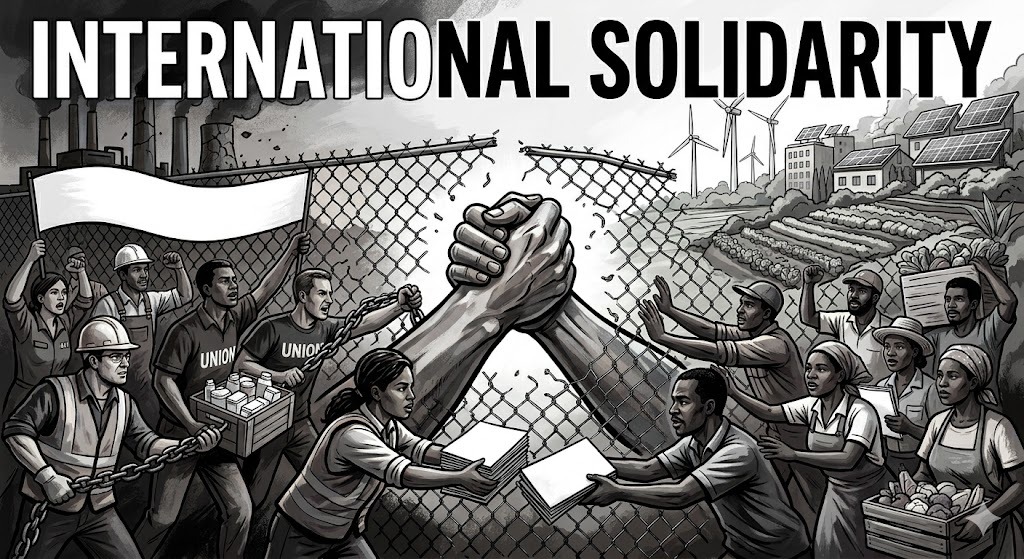
We have to be aware as citizens of the African continent that the oppression of any African state is also our oppression and we must remain steadfast in solidarity and move with the spirit of utu and ubuntu.
“Our future course must be guided dialectically. If by looking into the past we have known the present, to know the future we must look into the past and the present. Our action must be related to our concrete experience, and we must not give way to metaphysical hopes and wishes, hoping and wishing that the monster who has been after us throughout our history will someday change into a lamb; he won't! As Engels puts it, 'Freedom does not consist in dream of independence from natural laws, ... freedom of the will, therefore means nothing but the capacity to make decisions with knowledge of the subject.' We know the subject only too well and he is a monster.”
References
- Elizabeth J.A. Rodgers (2006), "Conflict diamonds", Journal of Financial Crime, Vol. 13 Iss 3 pp. 267–276. http://dx.doi.org/10.1108/13590790610678350
- Wangraf, L (2018) Exploiting Profits: Imperialism, Neo Liberalism and the New Scramble for Africa.
- Carpenter, L (2012) Conflict Minerals in the Congo: Blood Minerals and Africa's Unreported First World War. Retrieved from: https://web.mit.edu/12.000/www/m2016/pdf/Congo.pdf
- Christopher W. Mullins & Dawn L. Rothe (2008) Gold, diamonds and blood: International state‐corporate crime in the Democratic Republic of the Congo, Contemporary Justice Review, 11:2, 81–99. DOI: 10.1080/10282580802057678
- Beah, I (2007) A Long Way Gone: Memoirs of a Boy Soldier.

0 Comments